



In an industrial era defined by strict environmental mandates, rising utility utility costs, and a collective push toward resource conservation, how a facility manages its industrial wastewater is a major operational pivot point. For commercial car washes, transit authorities, heavy equipment repair centers, and military vehicle wash bays, water usage is one of the highest variable operating expenses. Discharging thousands of gallons of heavily contaminated, oily runoff down the municipal sewer line invites costly surcharges and structural legal liabilities under regional environmental safety frameworks. Conversely, constantly buying fresh municipal water to spray onto muddy chassis is a waste of capital. To break this inefficient, linear model, installing a cutting-edge wash water recycling systems is the most critical infrastructure upgrade a forward-thinking facility engineer or business owner can execute.
Modern reclamation technology has advanced past high-maintenance holding tanks that generate foul odors and stagnant sludge. Today’s premier recovery platforms leverage specialized physical and biological filtration loops to safely continuously strip out oils, heavy metals, suspended solids, and chemical residues. Implementing a closed-loop or high-ratio reclamation loop allows your business to drastically slash utility dependencies, avoid regulatory penalties, and position your brand as a clear leader in green industrial technology.
1. The Core Engineering: How Modern Water Reclamation Operates
To select the ideal reclamation layout for your facility, it is essential to first understand the multi-stage physical and chemical processes that clean heavily fouled wash water so it can be safely reused.
Step-by-Step Particle Separation and Filtration
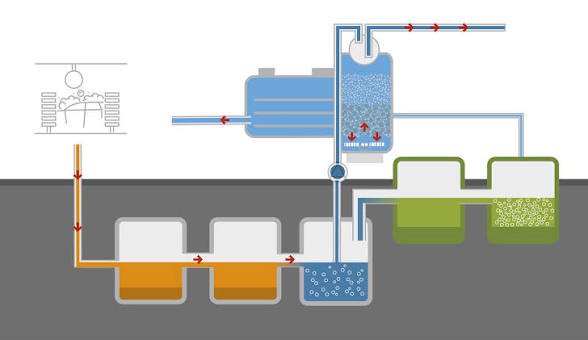
The reclamation journey begins the moment water enters the floor drains of a wash bay. This highly fouled influent contains a mixture of coarse grit, microscopic silt, free hydrocarbons, and chemical cleaning surfactants.
- Sediment Settling: The stream passes through a series of underground settling basins or sand interceptors where gravity pulls heavy mud, gravel, and asphalt chips down into a concentrated sludge hopper.
- Hydrocarbon Removal: The remaining liquid is routed into an integrated oil-water separator module, which utilizes oleophilic coalescing plates to strip free oils and grease down to less than 10 parts per million (ppm).
- Fine Filtration: The pre-cleared water is drawn through pressurized media filters (such as quartz sand, activated carbon, or auto-backwashing multi-media beds) to catch lingering microscopic particles, ensuring the effluent achieves optimal clarity before reuse.
The Critical Need for Continuous Odor and Bacteria Control
A common drawback of poorly engineered legacy systems is the rapid generation of foul odors, often described as a “rotten egg” smell. When wash water sits stagnant in a storage tank, anaerobic bacteria quickly consume organic material, generating hazardous hydrogen sulfide gas (H2S).
To eliminate this operational hazard, elite recycling platforms integrate automated aeration and sanitization loops. By continuously bubbling dissolved oxygen through the reclamation tanks and introducing precisely controlled doses of ozone (O3) or ultraviolet (UV) sterilization, the system systematically destroys anaerobic bacteria, destroys volatile organic compounds (VOCs), and guarantees that the recycled water remains completely odorless, clear, and safe for employee handling.
2. Structural Configurations: Closed-Loop vs. Fresh-Water Assist Systems
Different industries present varying water clarity requirements, spatial limits, and processing volumes. To accommodate these unique demands, engineering teams configure recycling setups under distinct plumbing loops.
The True Closed-Loop Reclamation Infrastructure
A closed-loop setup represents the absolute pinnacle of industrial sustainability. In this rigorous configuration, 100% of the water captured from the wash bays is routed through the treatment infrastructure, safely stored in a pressurized vessel, and piped straight back to the high-pressure wash nozzles for the next cycle.
Because the plumbing network is completely isolated from the municipal sewer line, this layout requires zero discharge permits, removing a massive layer of administrative oversight and compliance risk for businesses operating in environmentally sensitive or drought-prone regions.
The Fresh-Water Assist Hybrid Track
While a closed-loop setup is highly effective for heavy mud removal and early wash phases, certain applications—such as the final rinse cycle of a commercial car wash—require mineral-free water to prevent spotting on vehicle glass and paint. To achieve this, hybrid “fresh-water assist” tracks are implemented.
The system utilizes recycled water for the high-volume, intensive pre-soak and undercarriage wash cycles where the bulk of the cleaning happens. The system then switches to a low-volume fresh water feed for the final spot-free rinse. This final rinse water flows down the drain into the reclamation pit, acting as a natural top-off to compensate for water lost to evaporation and vehicle carry-out, keeping the recycling loop balanced without requiring manual inputs.
3. Navigating Regulatory Mandates and Economic ROI
While investing in water reclamation equipment significantly boosts corporate environmental profiles, the primary drivers for installation are immediate financial savings and strict municipal compliance.
Avoiding Punitive Environmental Fines and Codes
Municipal sewer authorities are tightening their industrial discharge parameters under guidelines established by the EPA’s Clean Water Act and local Publicly Owned Treatment Works (POTW) codes. Discharging heavy sediment, untreated detergents, or oils down the drain can quickly lead to severe stop-work orders and thousands of dollars in daily fines.
Furthermore, many municipal water districts now restrict or outright ban the operation of high-volume commercial wash centers unless they feature a certified reclamation system capable of recycling at least 50% to 80% of their total water volume. Implementing a certified recovery system ensures your facility bypasses these regulatory hurdles completely.
Calculating the Long-Term Capital Payback
The upfront capital expense of installing an advanced water recovery platform is quickly neutralized by the dramatic drop in monthly operational overhead. Sizing a system requires looking closely at your weekly vehicle volumes and regional utility rates:
| Expense Category | Traditional Open-Drain Costs | With Recycling Infrastructure | Total Percentage Reduction |
|---|---|---|---|
| Fresh Water Sourcing | $4.50 – $8.00 per 1,000 Gallons | Less than $0.80 per 1,000 Gallons | 80% – 90% Savings |
| Sewer Discharge Surcharges | $6.00 – $11.00 per 1,000 Gallons | $0.00 (Isolated Closed-Loop Track) | 100% Elimination |
| Nozzle & Pump Wear | High (Due to sediment scraping) | Low (Due to multi-media polishing) | 30% Extended Lifespan |
For an average commercial truck or transit wash bay running a standard census of vehicles daily, this combined utility drop translates directly into thousands of dollars saved monthly, typically resulting in a full capital return on investment (ROI) within 18 to 36 months of deployment.
4. Selecting and Customizing the Perfect System for Your Facility
Choosing the right equipment requires a detailed review of your business’s physical space constraints, processing demands, and long-term maintenance resources.
Sizing for Peak Flow Volumes and Contaminant Loads
The primary engineering parameter for scaling a reclamation system is your absolute peak flow rate, measured in gallons per minute (GPM). Sizing errors can lead to system failure; if a system is undersized, water will move through the coalescing plates and multi-media beds too quickly, creating internal turbulence that carries fine silt and oil over into the clean storage tank.
You must also match the system’s filtration media to your specific contaminant profile. For example, a car wash handling road grime requires an emphasis on oil separation and surfactant management, whereas a heavy mining equipment center requires massive sand settling traps to manage tons of thick mud before the water reaches the fine filters.
Key Industrial Design Metrics to Prioritize
To ensure long-term operational success and low labor overhead, look for equipment built to heavy-duty industrial standards:
- Corrosion-Resistant Architecture: Insist on tanks and structural frames built from marine-grade stainless steel, heavy powder-coated alloys, or thick high-density polyethylene (HDPE) to withstand continuous exposure to chemical detergents and moisture without rusting.
- Automated Self-Cleaning Loops: Elite systems feature programmable logic controllers (PLCs) that monitor pressure differentials across the media beds. When a filter becomes loaded with silt, the system automatically triggers a backwash cycle to flush out the trapped debris, keeping the filters clean without requiring manual labor or operator oversight.
5. Operational Best Practices: Ensuring Long-Term System Health
An industrial filtration platform is only as reliable as the operational protocol supporting it. To maximize the lifespan of your recycling infrastructure and protect your wash pumps, your field team should adhere to simple, structured best practices.
Regular Pit Maintenance and Sludge Management
Even the most advanced, fully automated recycling systems require routine physical maintenance. On a regular schedule—whether weekly or monthly depending on your vehicle volume—the thick sludge that settles to the bottom of the sand interceptors and catch basins must be pumped out and disposed of according to regional waste codes. Allowing sediment to accumulate unchecked will reduce the storage volume of the pits, shorten retention times, and force fine sand into the intake lines, where it can score pump seals and clog spray nozzles.
Selecting the Right Cleaners: “Quick-Break” Chemistry
The most common cause of performance failure in an otherwise flawless water recycling loop is chemical interference caused by selecting the wrong soaps. Traditional detergents create stable chemical bonds with oils and grease, holding them in an emulsion that passes straight through coalescing media undetected.
To maintain clean water standards, always mandate that your wash bay utilizes specialized “quick-break” degreasers and surfactants. These advanced chemical solutions hold oils in suspension temporarily while spraying the vehicle, but quickly release the hydrocarbons once the effluent pools in the calm settling pit, allowing the oil-water separator to remove the floating oils easily.
Conclusion: Secure Your Operation’s Future Today
Safeguarding your commercial operation from unpredictable utility increases, punitive environmental surcharges, and municipal stop-work orders requires a modern approach to resource management. Installing an accredited, professionally engineered wash water recycling system provides a permanent solution to wastewater handling. It transforms an expensive, high-risk waste stream into a valuable, circular asset—drastically lowering your facility’s operational costs while establishing your brand as a model of environmental responsibility.