



In the automotive world, the quality of your work is often judged before a technician even touches a vehicle. While your mechanics are focused on precision engineering and complex repairs, your customers are forming opinions based on the cleanliness of your waiting room, the organization of your service bays, and the hygiene of your restrooms. A cluttered, oil-stained, or dusty shop sends a message of negligence, whereas a pristine facility projects professionalism, safety, and reliability. This is why specialized auto repair shop janitorial services are no longer a luxury—they are a critical component of your business’s brand identity and operational success.
As a shop owner or manager, you know that automotive environments present unique cleaning challenges that standard office cleaners simply aren’t equipped to handle. From industrial-grade degreasing in the bays to high-traffic sanitization in the lobby, your facility requires a tailored approach. In this comprehensive guide, we will explore the specific cleaning needs of modern auto shops, the safety implications of professional maintenance, and how a clean environment directly correlates to increased customer retention and employee morale.
1. Beyond the Surface: Specialized Industrial Cleaning for Service Bays
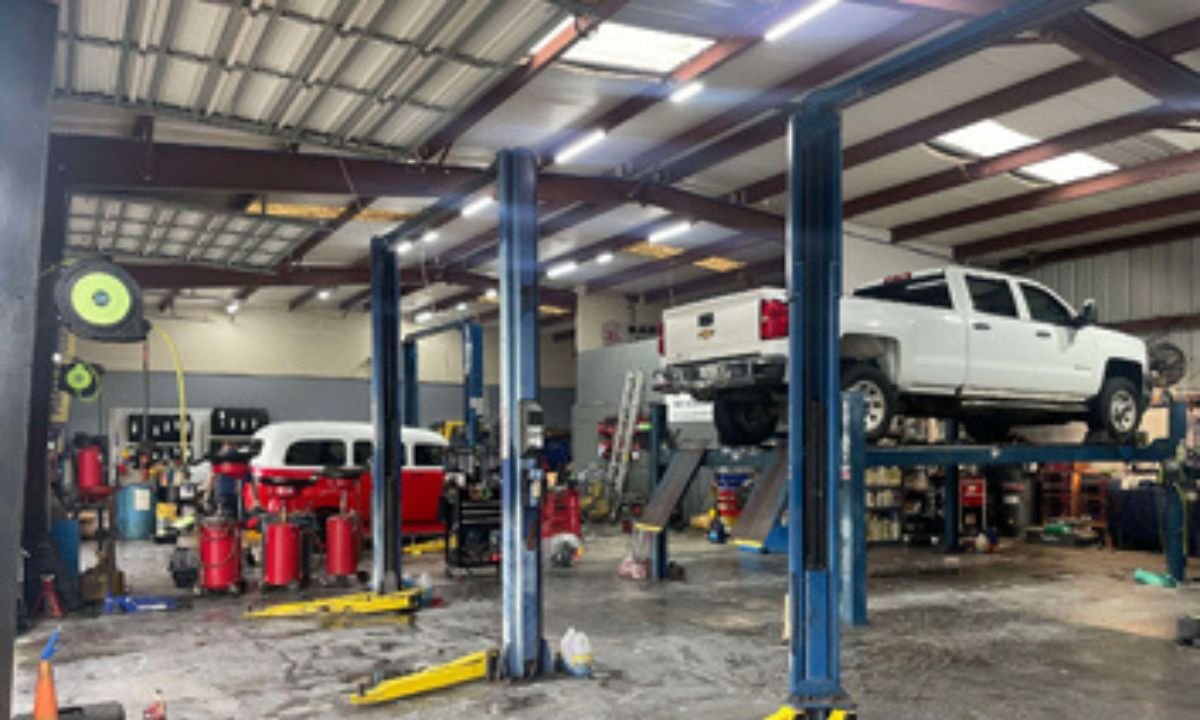
The heart of your business is the service bay, but it is also the most difficult area to maintain. Between oil leaks, fluid spills, and heavy foot traffic, the shop floor can quickly become a liability if not managed by experts.
Advanced Degreasing and Floor Maintenance
Standard mopping is ineffective against the synthetic oils and heavy-duty lubricants used in modern automotive repair. Professional janitorial services utilize industrial-grade degreasers and high-powered floor scrubbers to penetrate the porous surface of concrete floors. This doesn’t just improve the look of the shop; it prevents the long-term buildup of slick residues that can lead to hazardous conditions. Proper floor maintenance also protects your shop’s epoxy coatings or polished finishes, extending the life of your facility’s most used asset.
Tool and Equipment Surface Wipedowns
While your technicians maintain their personal tools, the common areas of the shop—such as lift controls, workbenches, and diagnostic stations—often accumulate a layer of grime and metal shavings. A specialized cleaning crew understands how to navigate these sensitive areas, removing debris without interfering with delicate electronics or mechanical components. Keeping these surfaces clean prevents the transfer of grease into customers’ vehicles, a common complaint that can damage your shop’s reputation.
2. Creating a Five-Star First Impression in the Waiting Area
While the “dirty work” happens in the back, your revenue is often secured in the front. For many customers, the time spent in your waiting room is the only part of the repair process they experience.
Upholstery Care and Dust Mitigation
Auto shops are naturally dusty environments. Tires, brakes, and metalwork release fine particulates that settle into the fabric of your waiting room chairs and onto your reception desk. Professional cleaners use high-efficiency particulate air (HEPA) vacuums to ensure that the air quality remains high and that dust is removed rather than just redistributed. Regular deep cleaning of upholstery and rugs removes the “shop smell”—that pervasive odor of oil and rubber—replacing it with a fresh, welcoming atmosphere.
High-Touch Point Sanitization
In a high-traffic service center, door handles, coffee stations, and credit card terminals are touched by dozens of people every hour. Especially in the modern health climate, a visible commitment to sanitization builds trust. Professional janitorial services prioritize these high-touch zones with hospital-grade disinfectants, ensuring that while you’re fixing their cars, you’re also protecting their health.
3. The Critical Role of Restroom Hygiene and Shop Morale
There is an old adage in the service industry: if the bathroom is dirty, the customer assumes the work is too. Nowhere is this more true than in an auto repair shop.
Deep Cleaning and Odor Control
Restrooms in automotive facilities are used by both grease-covered technicians and well-dressed clients. This creates a unique hygiene challenge. Standard cleaning often fails to address the deep-seated grime that accumulates in grout lines or around fixtures. A professional crew uses pressurized cleaning systems and targeted enzyme cleaners to eliminate odors at the source and keep porcelain surfaces shining.
Boosting Technician Productivity through Cleanliness
Cleanliness isn’t just for the customers; it’s for your team. Studies consistently show that employees are more productive and have higher morale in a clean, organized environment. When technicians aren’t navigating around spills or searching through clutter, they can focus on billable hours. Moreover, providing your staff with clean breakrooms and restrooms shows that you value their hard-work and well-being, which is essential for retaining top-tier talent in a competitive market.
4. Safety and Compliance: Mitigating Risk in the Workplace
An auto shop is a high-risk environment. From slip-and-fall hazards to hazardous material storage, cleanliness is a matter of legal and operational compliance.
Slip, Trip, and Fall Prevention
According to the Bureau of Labor Statistics, slip-and-fall accidents are a leading cause of workplace injury. In a garage, a small coolant spill can be as dangerous as a sheet of ice. Professional janitorial services are trained to identify these risk zones. By ensuring floors are bone-dry and treated with anti-slip solutions where necessary, you significantly reduce your liability and the likelihood of costly workers’ compensation claims.
Hazardous Material Disposal Awareness
While a janitorial service doesn’t typically dispose of used motor oil, they play a vital role in managing the secondary waste of a shop. This includes the proper disposal of oily rags, the cleaning of spill kits, and ensuring that secondary containment areas are free of debris. Being “OSHA-ready” at all times is only possible with a daily commitment to professional-grade cleaning.
5. Tailored Scheduling: Cleaning Without Interrupting Your Workflow
The biggest concern most shop owners have about hiring a cleaning service is interference. You can’t afford to have cleaners in the way while your team is trying to hit a deadline on an engine swap.
After-Hours Service for Peak Efficiency
The most effective auto repair shop janitorial services operate when your shop is closed. By performing deep cleans overnight or in the early morning, they ensure that when your first technician clocks in, the shop is reset and ready for a full day of production. This seamless integration allows your staff to focus on their expertise—fixing cars—while the cleaning experts handle the environment.
Customized Maintenance Plans
Every shop is different. A high-volume tire center has different needs than a boutique restoration shop. A professional janitorial partner will conduct a walkthrough of your facility to determine the frequency of tasks. You might need daily restroom and waiting room cleaning, but only weekly deep-scrubbing of the service bays. A customized plan ensures you aren’t paying for services you don’t need while ensuring the critical areas never fall below standard.
Conclusion: Invest in the Future of Your Shop
The automotive industry is evolving. With the rise of electric vehicles and high-tech diagnostic centers, shops are becoming cleaner, more clinical, and more professional. To compete in this new landscape, your facility must look the part. Professional janitorial services are not an overhead expense; they are an investment in your brand’s reputation, your team’s safety, and your customers’ comfort.
A clean shop is a busy shop. It tells the world that you have high standards, that you care about the details, and that your business is a place where quality happens.